




photo ButcherandBuschelBanner_zps60b017ff.jpg
Showing posts with label Dr. Julie Buzby. Show all posts

Wednesday, July 30, 2014

Ask the Veterinatian About Coprophagia

by Julie Buzby, DVM 

courtesy Dayland via Flickr.com
Looking Guilty
Dear Dr. Buzby,

How do we get our pups to stop eating their own, or other dogs, poop?

Thanks, Lori,
----------------------------------------------------------------------------------

Hello Lori,
You recently queried on AllThingsDogBlog about how to stop coprophagia in dogs.  Great question, but I recommend not reading my answer while eating a meal.  Coprophagia literally means “to eat feces”.  This activity, like dogs rolling on a dead carcass, is something we humans cannot appreciate.  Yet it is a very rewarding behavior for our canine companions.
For-Bid™ is probably the product most commonly recommended by veterinarians for this issue.  It’s been around for years, and is fed to dogs for 5-6 consecutive days, then as needed.  For-Bid™ is basically wheat gluten and monosodium glutamate (MSG).  MSG is the active ingredient because it is broken down in digestion to make the stool taste yucky.  Reviews are mixed on how well the product works, but I’m leary about prescribing wheat gluten and/or sodium glutamate to my patients. 
Several over-the-counter products are also available, some with more “gentle” ingredients (such as digestive enzymes and probiotics), but they also garner mixed reviews for efficacy. Then there’s the list of home remedies, such as feeding meat tenderizer or pineapple, used for their enzymatic properties in digestion. 
I need to point out that in a multidog household, if you are giving an oral product to address this problem, the product needs to be given to all dogs, not just the dog who ingests feces, so that all the accessible excrement is altered.
Unfortunately, in my experience, there is no magic bullet for coprophagia (though sometimes one of the above products or tactics will work for an individual).
The most reliable way to address this behavior requires diligent, hygienic management of the dog’s environment and access to stool.  This means:
•   strict supervision when the dog is outdoors
•   immediate picking up of the feces to remove the temptation
•   teaching the “leave it” command
•   as a last resort, using a basket muzzle to prevent ingestion
It is important to note that this behavior is not only a problem from the standpoint of the gross factor, but is also a possible route of transmission of internal parasites and bacteria.

Please talk to your veterinarian about your concerns.  Though coprophagia is usually just a behavioral habit, it can be associated with a dietary problem or even an underlying medical issue.

Dr. Julie Buzby is a homeschooling mom of seven, American Veterinary Chiropractic Association and International Veterinary Acupuncture Society certified holistic veterinarian, and passionate advocate for canine mobility.In her free time she serves on the Advisory Board for The Grey Muzzle Organization. She can be found at Twitter @DrBuzby and on Facebook.com/ToeGrips. You'll also find more of Dr. Julie's posts at our Ask the Vet Archives page.

Here are a few of her articles that may be of interest:
Follow Me on Pinterest
Dr. Julie's opinion or advice does not replace an actual exam with a veterinarian.

Saturday, February 8, 2014

Dr. Julie Talks Exercise for Your Dog

by Dr. Julie Buzby

Exercise is Good for All
It’s been the coldest winter in 100 years in the Lowcountry of South Carolina, my home.  This has curbed much of our family’s normal outdoor activity, including long walks for our dog.  I bought him his first coat, but he’s as eager as we are to get back inside on these bitter days.  Consequently, I’ve noticed a subtle change in his muscle tone and his behavior tending toward neurotic.  I know it’s because he’s not expending enough energy on our walks!

Exercise is essential for the wellbeing of our dogs.  Physical activity helps our pets maintain a healthy body weight and muscle mass, reduces their risk of certain diseases, and is vital to psychologic wellbeing. 

Exercise Enhances Bonding
We’re in the middle of a series of articles on helping your dog live a long, healthy life.  Exercise may be a reasonable substitute for the Fountain Of Youth!  A 2012 study from Brigham and Women’s Hospital in collaboration with the National Cancer Institute found that exercise had a stronger correlation to life expectancy than body weight.  Further, whether a person was of normal body weight, overweight, or obese, increased physical activity added years of life.  Though more physical activity generally corresponded to a longer life expectancy, even modest amount of exercises were proven to pay dividends in health and longevity.

Although this research was done in humans, it should encourage us to stop making excuses and provide opportunities for our pets to move!   An exercise program should be tailored specifically to your dog, taking into account breed, age, physical condition and health status, as well as your own lifestyle. 

Start slow and slowly work up to higher levels of activity as exercise tolerance improves.  Unless your dog has medical restrictions, he should be able to tolerate 20 minute leash walks at least 5 days a week, working up to one hour walks.  Other options for activity include swimming, retrieval play, jogging, and biking.  Beware of “weekend warrior” activity, which commonly leads to unfit dogs overdoing it and suffering injuries.

I’m a huge believer in the old adage “Use it or lose it.”  Be inspired knowing that wherever you and your dog are on the fitness spectrum, you’re likely to extend your lives together through exercise.  A consistent exercise plan will positively impact your dog’s quality and quantity of life!  In fact, as research has shown, it’s good for both ends of the leash!

Dr. Julie Buzby is a homeschooling mom of seven, American Veterinary Chiropractic Association and International Veterinary Acupuncture Society certified holistic veterinarian, and passionate advocate for canine mobility.In her free time she serves on the Advisory Board for The Grey Muzzle Organization. She can be found at Twitter @DrBuzby and on Facebook.com/ToeGrips. You'll also find more of Dr. Julie's posts at our Ask the Vet Archives page.

Here are a few of her articles that may be of interest:
Dr. Julie's opinion or advice does not replace an actual exam with a veterinarian.

Follow Me on Pinterest

Wednesday, August 28, 2013

Tweaking Your Dog's Vaccinations

by Dr. Julie Buzby
courtesy Chuckumentary via Flickr.com
Annual Vaccinations? Maybe Not!
The idea of dogs going to the vet for their “annual shots” just because one year has transpired, is as outdated as the idea that the earth is flat. There is overwhelming scientific evidence that dogs should be vaccinated based on their individual risk factors. These include age, breed, lifestyle, and environmental exposure.

Why does it matter?  

Vaccines jolt the immune system. This jolt creates an immune response in the body which builds antibodies against an altered, non-infectious bug. These antibodies should be protective if there is exposure to the live version of the germ. However, the jolt that helped create protection can be problematic.  Autoimmune diseases, tumors, thyroid disease, and allergic or anaphylactic reactions (shock) are complications that can occur soon after vaccinations, or much later.

•  Ask your veterinarian about vaccinating every 3 years for Distemper and Parvo, or titering to avoid re-vaccinating individuals with “protective” titers.
•  Discuss your dog’s lifestyle with your vet to design a customized vaccine protocol.
•  If your dog has ever had a prior vaccine reaction, make sure your veterinarian is aware of that.
•  Vaccinate your adult dog for rabies every 3 years, or the maximum interval allowed by law. All states now have 3 year licenses after the second vaccine is administered, but county and city laws may differ. Check out rabieschallengefund.org to learn about a grassroots movement seeking to extend the rabies booster interval from 3 to 5 (and then 7) years!

What about drugs? A wise old veterinary professor once quipped, “If a medication doesn’t have side effects, it doesn’t have effects either.” This is true for everything from aspirin to antibiotics. Think about the drug commercials on TV which end with 10 seconds of serious warnings!  

•  Make sure your veterinarian is aware of all drugs and supplements your dog receives, especially when writing a new prescription. If your dog is on chronic medications, such as thyroid medication or arthritis medication (NSAIDs), periodic bloodwork is recommended to monitor organ systems and/or blood levels of the drug.
•  With your veterinarian’s help, work to find the lowest effective pain medication dosage to minimize side effects.
•  In some situations, supplements may be used in place of, or along with drugs to allow lower drug dosages.
•  In terms of potential for toxicity, drugs fall on a spectrum. Some are much safer than others. Ask your vet to educate you on the common side effects of any medication your dog receives.
•  Side effects of drugs can often be counteracted with herbs. An example of this would be using milk thistle along with drugs known to insult the liver.
•  Understand that adverse drug reactions many not occur immediately. Sometimes they occur after the dog has been on the drug for years. 

I’m convinced that vaccinations and medications are a double-edged sword. Both are an integral part of maintaining health. Both also hold the potential for harm.

Yes, I am opening a can of worms. But I couldn’t write a series on helping our dogs reach their maximum health and longevity potential without touching on these issues. Be informed. Be intentional. Be observant, with the ultimate goal of partnering with your veterinarian in weighing the risks versus benefits of anything you administer to your dog.


Dr. Julie Buzby is a homeschooling mom of seven, American Veterinary Chiropractic Association and International Veterinary Acupuncture Society certified holistic veterinarian, and passionate advocate for canine mobility. She can be found at Twitter @DrBuzby and on Facebook.com/ToeGrips. You'll also find more of Dr. Julie's posts at our Ask the Vet Archives page.

You may also enjoy reading her recent articles:


Follow Me on Pinterest
Dr. Julie's opinion or advice does not replace an actual exam with a veterinarian.

Tuesday, August 6, 2013

Ask the Vet: Finicky Eaters

by Dr. Julie Buzby
courtesy TWM News via Flickr.com
Dear Dr. Julie,

My Lab/Sharpei mix was adopted in February after 8 months there. Apparently she had eating issues while living there. It took about 2 months to get her eating somewhat better at home. What finally worked was mixing her canned food with tuna.

Following a vacation when she stayed with family, her eating habits have worsened, but she will eat human food when offered it. Any suggestions for improving her diet and eating habits?

-------------------------------------------------------------------------------------------------------------------
Dear Reader,
First and foremost, we need to determine if this is a medical problem or a behavioral issue.  Although your dog’s history suggests that her poor appetite correlates with stress, there are several medical explanations that we need to consider.  The fact that she will readily eat table foods doesn’t rule out a medical cause.

I strongly recommend that you start with a visit to your veterinarian, but we’ll walk through a cyber vet visit via this blog post!

Step One: A thorough history

-What diets (and protein sources) have you tried?
-Is she gaining or losing weight? 
-Does she get any treats or table scraps?
-Does she have access to food from neighbors, other family members, or other pets?
-Does she have other gastrointestinal (GI) signs, like vomiting or diarrhea?
-How is her activity level?
-Describe her general personality.  Is she a nervous dog?

Step Two:  A complete physical exam

Your dog should be examined from nose to tail, to include a thorough oral exam, abdominal palpation, rectal exam, and assessment of body condition score.  If your dog is thin, I am going to be more concerned that this is a medical issue than if she is ideal or overweight. 

Step Three: Diagnostic tests

A complete blood count (CBC), chemistry, and urinalysis will serve as our “minimum data base”.  If these are normal, that doesn’t rule out chronic GI disease, so we’ll also send out bloodwork for a “GI panel”.  This will help in the diagnosis of inflammatory bowel disease and pancreatic disorders.

If that is also unremarkable, I’d run a baseline cortisol to rule out atypical Addison’s disease and recommend an abdominal ultrasound.  If all diagnostic results were within normal limits, I would presumptively diagnose an underlying behavioral issue.

Step Four:  Treatment

1.    Be encouraged that your situation should improve as your dog continues to settle into your home.  Try to think about life from her perspective and remove any “stressors”, especially changes to her daily schedule. 

2.    Probiotics, which help normalize the flora in the GI tract, may be beneficial for your dog.  Purina’s FortiFlora, Iams Prostora, or the human products Culturelle, Align, and VSL#3 are all consistently good quality.

3.    Though I typically recommend feeding twice daily, it’s possible that your picky eater might do better eating once per day.  Do not feed free choice ̶ where the food is always available.

4.    Try tough love.  Offer food 2-3 times per day for about 20 minutes per feeding. After 20 minutes, if your dog is not eating, pick up the food until the next meal. I'd also ignore your picky eater for 20 minutes before meals and then lavish praise and attention when she is actually eating.

5.    Sometimes finicky eaters do better with limited ingredient or hypoallergenic diets.

6.    Feed the highest quality diet you can afford.  Palatability can be affected by changing the consistency, texture, and temperature of the food. 

7.    Since she has an affinity for human foods, you could always consider home cooking.  I would only endorse this long term if you were to consult a veterinary nutritionist to custom formulate a balanced recipe for your dog.  Check out http://www.vetmed.ucdavis.edu/ucvmc_sd/nutrition/nutrition_faq.cfm and www.balanceIT.com.


Dr. Julie Buzby is a homeschooling mom of seven, American Veterinary Chiropractic Association and International Veterinary Acupuncture Society certified holistic veterinarian, and passionate advocate for canine mobility. She can be found at Twitter @DrBuzby and on Facebook.com/ToeGrips. You'll also find more of Dr. Julie's posts at our Ask the Vet Archives page.

You may also enjoy reading her recent articles:

Dr. Julie's opinion or advice does not replace an actual exam with a veterinarian.


Follow Me on Pinterest

Tuesday, July 23, 2013

Ask the Vet Welcomes Dr. Julie Buzby

by Carrie Boyko, CEB

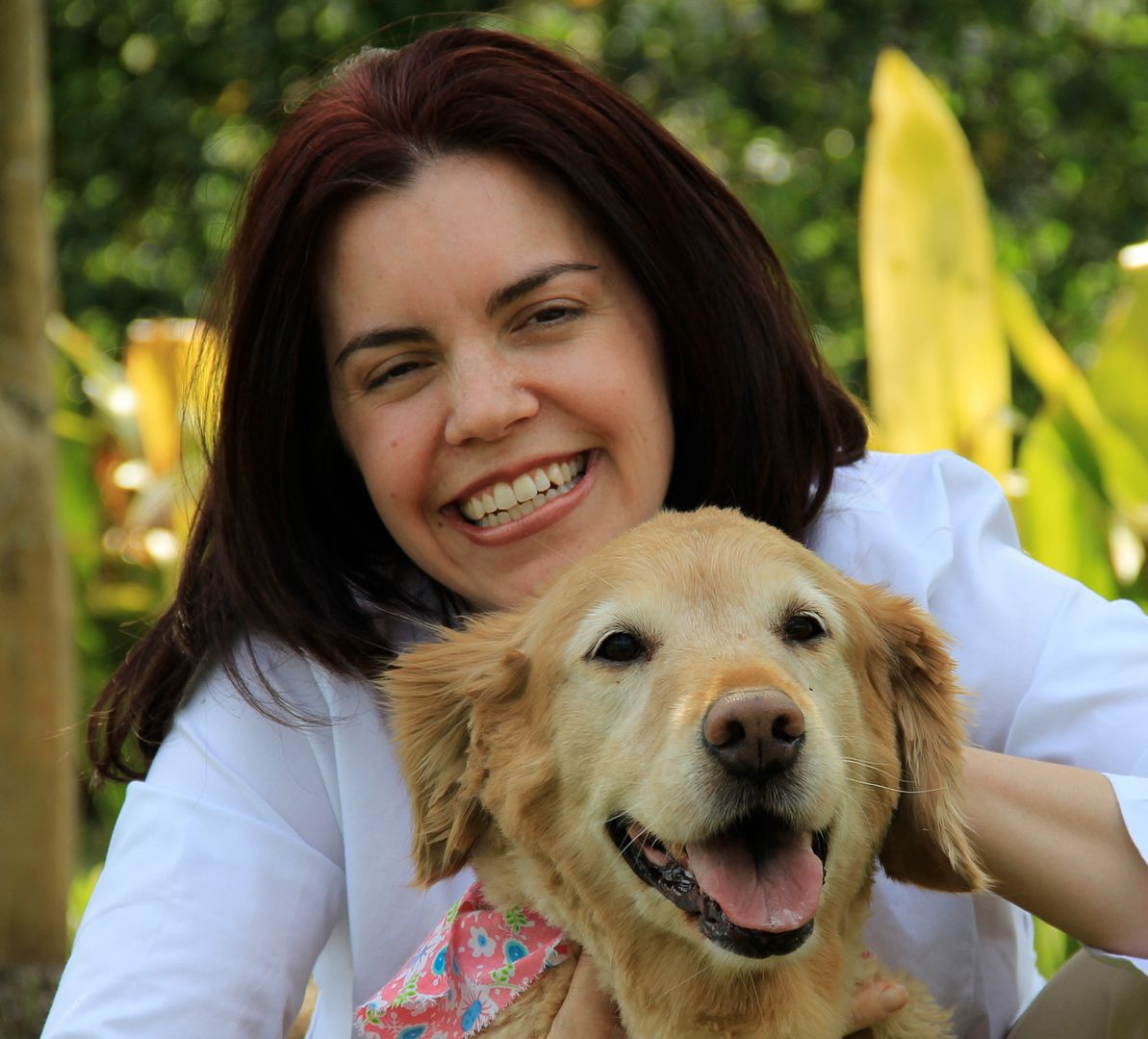
courtesy Dr. Julie Buzby
Dr. Julie Opens Up Shop
as our New Ask the Vet Columnist
Do you recognize this smiling face? Dr. Buzby was recently a guest blogger here, penning 10 Tips for Fido's Longest Life. She offered some terrific, very well-written tips and I had the pleasure of having a wonderful discussion with her by phone. The net result is that I can now introduce you to our newest Ask the Vet columnist. Welcome Dr. Julie!

This is one vet with some major energy. I'm not exactly sure how she has manages it all. In her relatively short life--when compared to my own--she has received her veterinary degree, furthered this with certifications in veterinary chiropractic and acupuncture, practiced for 16 years, owned her own practice, started a business sharing a terrific new invention for canine mobility, and is homeschooling her 7 children. I'm exhausted just thinking about her days.

Dr. Julie's enthusiasm for her family, clients, mobility products, and patient education all seem to share a similar quality: dedication. She absolutely bubbles when you speak with her in person. I made up my mind that she was our new columnist before we were 5 minutes into that engaging conversation.

Listening to her tell the story of the birth of ToeGrips really got me to thinking about Xena. Our beautiful Retriever mix girl began to struggle with getting up at the end of her life. When booties and other non-slip measures were not well-received, we placed beds and rugs in all her favorite resting places, to give her extra footing. She continued to avoid these spots in favor of the cool tile floor; we sure could have used ToeGrips with her!

As a holistic veterinarian, Dr. Buzby and I have a lot in common in our dreams for our pets. As we gear up for her to begin answering the veterinary questions I have collected from some of you, she'll be writing a more thorough post on each of the 10 points in her guest post linked above. Her goal is to offer you one of these posts each month; watch for her topics and learn more about how you can extend your pet's life.

In addition, Dr. Julie will soon be bringing you some answers. Thank you for your patience as I have worked to seek out a new Ask the Vet columnist. Dr. Mark's new practice is doing well but keeping him very busy. I wish him well!

Dr. Buzby's first installment will run tomorrow. Please do leave a comment. Let her know more about your interests and feel free to leave questions. We'll add them to our list and get to you as soon as possible. I also take your Ask the Vet questions at AllThingsDogBlog@gmail.com. 

You can learn more about Dr. Buzby by visiting her profiles at:

Twitter: @DrBuzby
Facebook: ToeGrips
Linkedin
ToeGrips.com 
Dawgbusiness
and photos at our All Things Dog Blog's Pinterest Page

After Dr. Buzby gets rolling, we'll be sure to add her posts to the Ask the Vet Archives, allowing you to research topics of interest in this area. 

Follow Me on Pinterest
Related Posts Plugin for WordPress, Blogger...
 
Blog Design by A Mommy's Blog Design (© Copyright 2011)
Header Banner created by Bill Henderson Design