




photo ButcherandBuschelBanner_zps60b017ff.jpg
Showing posts with label Ask the Vet Column. Show all posts

Monday, May 12, 2014

Ask the Vet About Giardia

by Dr. Julie Buzby, DVM
Buffer
Help Avoid Giardia with Fresh Water
at the Dog Park

Dear Dr. Julie,

Could you please cover Giardia-what it is, what it does, and all the ways a dog can get it.  I recently learned from my vet that animal droppings have runoff and eating their droppings can cause this illness.  Please fill us in.

Dee
---------------------------------------------------------------------
Dear Dee,

Giardia is a microscopic parasite known as a protozoa, which can cause gastrointestinal symptoms in dogs, cats, and people. 

The organism has two life stages—the tough “cyst” form for transmission outside the body, and the active “trophozoite” form which thrives in the small intestines.

Dogs contract the protozoa by swallowing the cysts which have been shed in the feces of other infected canines.  The cysts may be found in contaminated water, soil, and even on a pet’s fur.

After being ingested and passing into the intestines, the cysts change into the “trophozoite” or feeding form and attach to the wall of the dog’s intestine.  Eventually this can produce symptoms, namely foul-smelling diarrhea which may contain blood or mucus, because of damage to the wall of the intestine.  However many infected animals never show symptoms.  An infected dog will eventually pass cysts in his stool, which continues the life cycle when another dog consumes those cysts.

Diagnosis is often made based on clinical signs, but can be confirmed by special fecal examinations under a microscope or through a newer SNAP test on the stool which checks for Giardia cell proteins.

Treatment is usually fairly straightforward with prescription medications.

One up side to the harsh winter many of us endured is that alternate freezing and thawing cycles will kill Giardia cysts in the environment.

Your question eluded to the transmission of Giardia to dogs from wild animals, and the good news is that Giardia is fairly “species specific”, meaning that generally cats don’t get Giardia from dogs, and vice versa.  So the droppings of fox, coyote, and feral dogs would be my main concern for transmission.

As a final note, feces (and urine) from a variety of animals, ranging from deer to raccoons, can contain internal parasites, bacteria, and protozoa which could cause your dog to become ill.  Certainly your vet’s advice to do your best to prevent your dog from coming in contact with animal droppings is wise!

Dr. Julie Buzby is a homeschooling mom of seven, American Veterinary Chiropractic Association and International Veterinary Acupuncture Society certified holistic veterinarian, and passionate advocate for canine mobility.In her free time she serves on the Advisory Board for The Grey Muzzle Organization. She can be found at Twitter @DrBuzby and on Facebook.com/ToeGrips. You'll also find more of Dr. Julie's posts at our Ask the Vet Archives page.

Here are a few of her articles that may be of interest:
Dr. Julie's opinion or advice does not replace an actual exam with a veterinarian.

Follow Me on Pinterest

Wednesday, April 9, 2014

Dr. Julie Addresses Pet Chiropractic Care

by Dr. Julie Buzby, DVM
Time for an Adjustment for Fido? Read on...
Prior to beginning my training for certification through the American Veterinary Chiropractic Association (AVCA) in 1998, my only experience with chiropractic was from a distance.  For many summers, I’d worked as an assistant for a veterinarian who treated equine athletes.  I heard countless stories of horses performing and feeling better after their adjustments.  Often I’d hold the end of the lead rope while my boss did his work, watching his patients’ reaction to treatments—lowering their head, licking and chewing.  I vowed that as soon as I finished veterinary school and was eligible, I would add chiropractic training to my “toolbox” to treat my patients.

I kept my promise, but less than halfway through the course, I had become discouraged.  Chiropractic was so foreign to what we’d learned in vet school, I was seriously contemplating giving up.  Savannah, a young paralyzed rabbit, changed the course of my career.  She had kicked out her hind legs during a procedure at the veterinary clinic where I worked and had been instantly paralyzed in the hind end.  We’d treated her medically for several weeks with little improvement.  After finishing a pertinent training module, I asked her owner to bring Savannah in for me to palpate her spine.  Immediately after I adjusted her back, we set her down on the floor and she hopped away.  Needless to say, I didn’t quit my training! 

While limited formal research is available on the efficacy of animal chiropractic, and
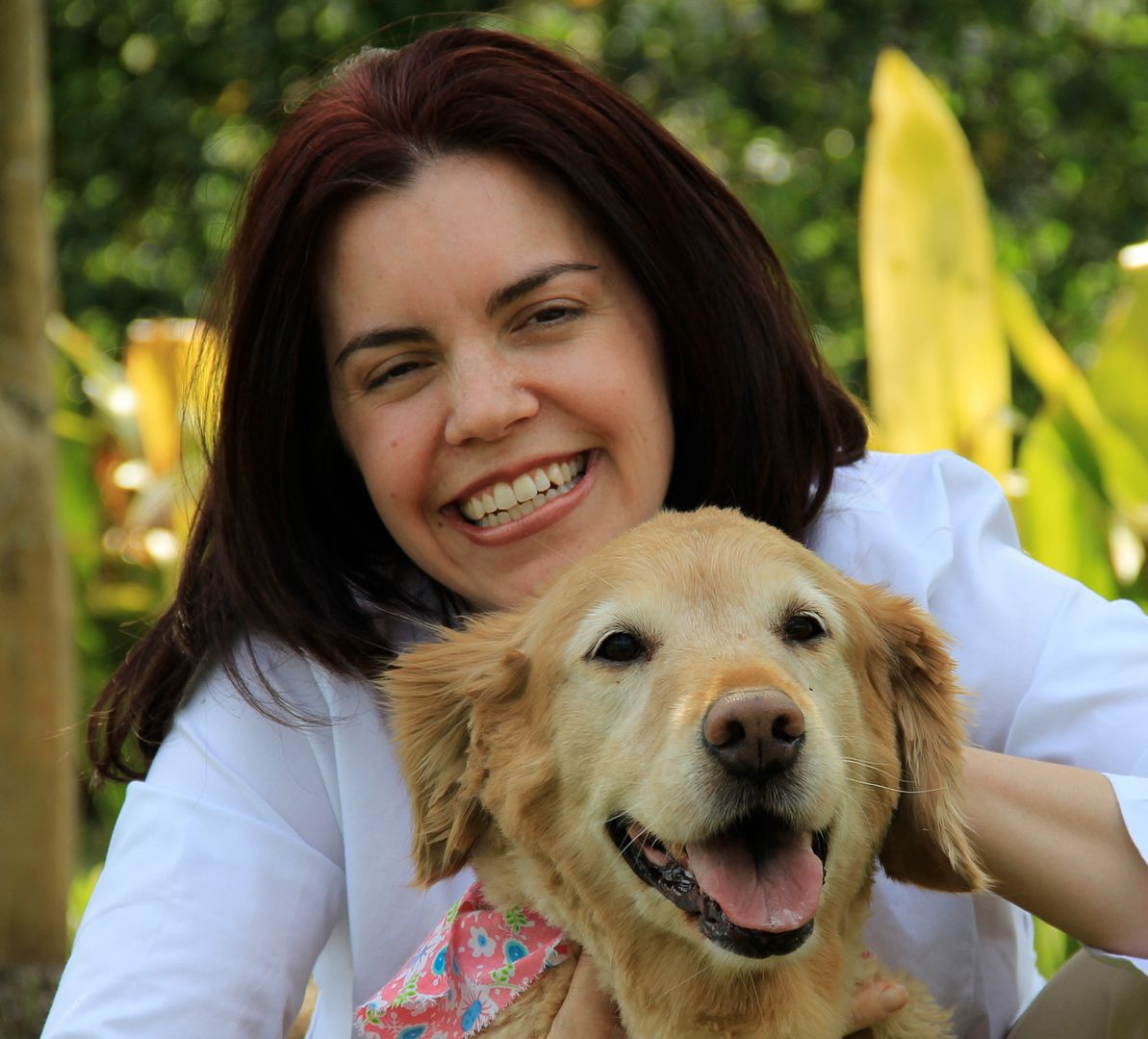
Dr. Julie at Work
there are plenty of naysayers, having practiced this modality for 16 years, I am positive that it can help dogs in ways that Western medicine cannot.  Don’t get me wrong—I still embrace my veterinary training and combine a traditional medical approach with alternative medicine in my practice, but Western medicine evolved for crisis intervention.  Chiropractic seeks to prevent “dis-ease” and restore balance, to avoid the crisis.

Because chiropractic impacts the nervous system, which affects every cell in the body, chiropractic has the potential to be helpful for a variety of musculoskeletal and internal maladies.  But I find chiropractic care most beneficial in the treatment of neck and back pain, certain lamenesses, injuries, and sudden behavioral changes that can be linked to pain.

Depending on conformation, age, and symptoms, I see patients at intervals that vary from weeks to months.  I strongly recommend finding an AVCA-certified doctor in your area if you wish to learn more about this type of care for your dog.

I included routine chiropractic adjustments in my list of ten ways to help your dog live his longest, healthiest life.  (Carrie—maybe link to article there?)  In order to achieve that goal, we must work in the realm of preventing dysfunction and not reacting to it.  Chiropractic adjustments free the nervous system of interference so the body can do what God created it to do—heal itself!

Dr. Julie Buzby is a homeschooling mom of seven, American Veterinary Chiropractic Association and International Veterinary Acupuncture Society certified holistic veterinarian, and passionate advocate for canine mobility.In her free time she serves on the Advisory Board for The Grey Muzzle Organization. She can be found at Twitter @DrBuzby and on Facebook.com/ToeGrips. You'll also find more of Dr. Julie's posts at our Ask the Vet Archives page.


Follow Me on Pinterest
Dr. Julie's opinion or advice does not replace an actual exam with a veterinarian.

Wednesday, March 12, 2014

Ask the Vet About Dewclaws

by Carrie Boyko, CEB
Buffer
You Want a Picture of My What?

Dear Dr. Julie,

Thank you for providing valuable information on All Things Dog Blog. I would like to understand more about Dewclaws, their purpose, meaning and potential problems:
  1. Some say that the presence of dewclaws has meaning. Can you shed light on this?
  2. Do Dewclaws have any usefulness or purpose?
  3. Are Dewclaws dangerous? Should they be removed? I hear that some are, but do not know why.
Thanks, Ken
--------------------------------------------------------------------------------
Dear Ken,

Great questions, not without controversial answers.  I’ve read that the practice of removing dewclaws began 100-150 years ago by German breeders. To this day, some breeders advocate dewclaw removal to create the “clean line” appearance of a straight front leg, in other words, for cosmetic reasons. 

I need to explain that there are two different types of dewclaws—commonly called “floppy” and “attached”.  Floppy dewclaws usually occur on the hind legs of dogs and are only attached to the leg by skin.  These nails are loose and freely moveable, increasing the risk of them snagging on underbrush or carpets.  Although some breeds require them for showing, most vets (including me) recommend removal of floppy hind dewclaws at time of spay or neuter (if it wasn’t done at 2-5 days of age).
A Healthy Dewclaw
Nice and Short

Attached dewclaws, by contrast, are typically present on dogs’ forelimbs and are connected to the leg by bone.  I never recommend routine removal of “attached” dewclaws. 

Why?  Dewclaws do have purpose.  My dog uses his daily when “holding” a rubber bone to gnaw.  Anatomically, dewclaws are equivalent to our thumbs.  More significantly, there is growing evidence that front dewclaws help stabilize the leg and prevent torque on the main joint near these dewclaws, called the carpus (which is equivalent to our wrist, or a horse’s knee).  The forces applied to the carpal joint are most pronounced in canine athletes, for example lure coursing greyhounds, agility dogs threading through weave poles, and flyball dogs making sharp turns at a gallop. 

However this notion of the dewclaws contributing to carpal stabilization is controversial.  Many orthopedic surgeons deny a connection, but others admit that dewclaw removal does seem to increase the incidence of arthritis development in the dog’s “wrist”.  One study showed that cutting a tendon in the leg that attaches to the dewclaw did produce degenerative joint disease in the carpus, supporting the connection between dewclaws and stabilization of the dog’s “wrist”.  To summarize, there is no documented proof that removing the front dewclaws of dogs as a routine procedure results in any benefit, but there may be evidence of the opposite. 

Finally, please remember how important it is to provide routine nail care for your dog.  Forgotten dewclaws can grow around in a curl and embed into the dog’s skin. 

Every day I go to work I see patients with problems resulting from long nails.  Here’s more information on trimming yourdog’s nails, which includes a video tutorial.  

Dr. Julie Buzby is a homeschooling mom of seven, American Veterinary Chiropractic Association and International Veterinary Acupuncture Society certified holistic veterinarian, and passionate advocate for canine mobility.In her free time she serves on the Advisory Board for The Grey Muzzle Organization. She can be found at Twitter @DrBuzby and on Facebook.com/ToeGrips. You'll also find more of Dr. Julie's posts at our Ask the Vet Archives page.

You may also enjoy reading her recent articles:

Dr. Julie's opinion or advice does not replace an actual exam with a veterinarian.
Follow Me on Pinterest

Saturday, February 8, 2014

Dr. Julie Talks Exercise for Your Dog

by Dr. Julie Buzby

Exercise is Good for All
It’s been the coldest winter in 100 years in the Lowcountry of South Carolina, my home.  This has curbed much of our family’s normal outdoor activity, including long walks for our dog.  I bought him his first coat, but he’s as eager as we are to get back inside on these bitter days.  Consequently, I’ve noticed a subtle change in his muscle tone and his behavior tending toward neurotic.  I know it’s because he’s not expending enough energy on our walks!

Exercise is essential for the wellbeing of our dogs.  Physical activity helps our pets maintain a healthy body weight and muscle mass, reduces their risk of certain diseases, and is vital to psychologic wellbeing. 

Exercise Enhances Bonding
We’re in the middle of a series of articles on helping your dog live a long, healthy life.  Exercise may be a reasonable substitute for the Fountain Of Youth!  A 2012 study from Brigham and Women’s Hospital in collaboration with the National Cancer Institute found that exercise had a stronger correlation to life expectancy than body weight.  Further, whether a person was of normal body weight, overweight, or obese, increased physical activity added years of life.  Though more physical activity generally corresponded to a longer life expectancy, even modest amount of exercises were proven to pay dividends in health and longevity.

Although this research was done in humans, it should encourage us to stop making excuses and provide opportunities for our pets to move!   An exercise program should be tailored specifically to your dog, taking into account breed, age, physical condition and health status, as well as your own lifestyle. 

Start slow and slowly work up to higher levels of activity as exercise tolerance improves.  Unless your dog has medical restrictions, he should be able to tolerate 20 minute leash walks at least 5 days a week, working up to one hour walks.  Other options for activity include swimming, retrieval play, jogging, and biking.  Beware of “weekend warrior” activity, which commonly leads to unfit dogs overdoing it and suffering injuries.

I’m a huge believer in the old adage “Use it or lose it.”  Be inspired knowing that wherever you and your dog are on the fitness spectrum, you’re likely to extend your lives together through exercise.  A consistent exercise plan will positively impact your dog’s quality and quantity of life!  In fact, as research has shown, it’s good for both ends of the leash!

Dr. Julie Buzby is a homeschooling mom of seven, American Veterinary Chiropractic Association and International Veterinary Acupuncture Society certified holistic veterinarian, and passionate advocate for canine mobility.In her free time she serves on the Advisory Board for The Grey Muzzle Organization. She can be found at Twitter @DrBuzby and on Facebook.com/ToeGrips. You'll also find more of Dr. Julie's posts at our Ask the Vet Archives page.

Here are a few of her articles that may be of interest:
Dr. Julie's opinion or advice does not replace an actual exam with a veterinarian.

Follow Me on Pinterest

Thursday, November 14, 2013

Ask the Veterinarian About Skin Rashes

by Dr. Julie Buzby
Buffer
courtesy Moyen_Brenn via Flickr.com
My dog, Maddy,  is 3 years old and has a grain allergy. She is on a grain-free diet. However, when I got her at 3 months I was not aware of her allergies. It was at 8 months we discovered it.

Our Vet initially diagnosed it as yeast from grain allergy--gave us steriods pills, inflamation drops, and ear wash to use--and it worked great. However, several months ago my husband bought some chews he thought were grain free. She developed a rash on her belly and ears and I discovered the chews were made with wheat. 

I took her in to the Vet clinic had her checked out with a new vet; he gave her some antibiotics. It seems to have somewhat gotten rid of the rash but it has since then reappeared and she has eaten no grains. 

I have done some research on this and just like to humans--antibiotics kill the natural flora in our intestines. I think she is having over active yeast growth in her ears and flaky red bumps on her belly and genital area. I have treated her ears with apple cider vinegar and water (50/50) and it healed quickly. However, the few bumps on the back hind legs that I can't seem to treat because of all the fur. I spoke to the vet and he wants to give her antibiotics again! 

What do you recommend? A second opinion? Can I give her plain organic yogurt w/ live cultures or dog probiotics? I'm confused and annoyed because several vets I have spoken to just refer the rash to an allergy? An allergy to what? She doesn't eat any grains! They never seem to mention yeast growth. At this point any advice is welcomed. I hate to see her cry when she licks her belly. Thank you!
 
Best Regards. 
Michell B.
----------------------------------------------------------------------------------
Dear Michell,

According to statistics, the top three reasons dogs visited veterinarians in 2012 were skin allergies, ear infections, and skin infections.  Poor Maddy appears to have all three, which is not uncommon.  The ears are just an extension of skin, and both are prone to infection secondary to allergies.

Pruritis (itchy skin) can have multiple causes and take months to sort out.  My goal is to equip you to better communicate with your vet about Maddy’s condition.

We have two issues to address:

1.  Maddy’s ear and skin infection.
2.  The underlying cause, which is most likely allergies.  We must manage her allergies to prevent recurring infections. 

I do think Maddy has food allergies, which are typically incurable in dogs, and can develop at any age.  However, she may also be affected by things in the environment.  Dogs with allergies seem to have an “allergic threshold”, meaning they have multiple allergies, but there is a point where “the straw breaks the camel’s back” and symptoms manifest.  The predominant sign of food allergy is that symptoms are year round, not seasonal.  Further, recurrent external ear infections are present in more than half of dogs with food allergies. 

The most common food allergens for dogs (in order) are: beef, dairy, wheat, chicken, egg, lamb, and soy.  About half of all dogs are allergic to more than one ingredient.  It’s important to understand that “grain free” is not synonymous with “hypoallergenic”.  Consider the ingredients in diets on which she thrives, versus the ingredients found in foods or treats that cause her to flare up.  I’m guessing there’s more to the story than just grains.  How can we determine what Maddy is allergic to? 

Blood tests for food allergies are not reliable and are a waste of your money.  A “dietary trial” is the gold standard for diagnosing food allergies.  Talk with your veterinarian about conducting a food trial.  Maddy’s doctor may recommend a prescription diet, or even home cooking a balanced recipe.  Over-the-counter diets should not be used for food trials, but can be fed once the offending ingredients have been identified.

As for her skin, the rash you describe sounds classic for a skin infection. While this is not the same thing as skin allergies, the two often go hand in hand.  This type of infection is caused by bacteria and/or yeast, and each is treated differently.

Bacterial skin infection, called pyoderma, is best treated topically and with oral antibiotics.  Through simple tests, your veterinarian can tell what types of organisms are causing her skin and ear infections and determine proper treatment.  If she requires another course of antibiotics, I would recommend administering high quality human probiotics, or a doggie product like FortiFlora, during the course of her treatment.

Ultimately, I completely understand your concerns.  Allergies are frustrating for clients and veterinarians alike, not to mention the dogs!  While, Maddy will likely always be prone to skin flare ups, I feel confident that you and your veterinarian can transition her out of a skin “crisis” to long-term successful management of her skin and allergies.


Dr. Julie Buzby is a homeschooling mom of seven, American Veterinary Chiropractic Association and International Veterinary Acupuncture Society certified holistic veterinarian, and passionate advocate for canine mobility.In her free time she serves on the Advisory Board for The Grey Muzzle Organization. She can be found at Twitter @DrBuzby and on Facebook.com/ToeGrips. You'll also find more of Dr. Julie's posts at our Ask the Vet Archives page.

Here are a few of her articles that may be of interest:
Dr. Julie's opinion or advice does not replace an actual exam with a veterinarian.
Follow Me on Pinterest

Wednesday, September 25, 2013

Ask the Veterinarian:
Insight on Friendship Changes

by Dr. Julie Buzby
Scent May Change Your Pet's Playtime Dynamic
Hi, I have a female 10 month old Lhasa Apso puppy who has a best fur friend who is a 6 month old sheltie mix. These puppies have played together from day one of meeting each other. My puppy was spayed at 6 months. After recovery the two went on to have play dates and be the best of fur friends. Recently the sheltie puppy was spayed, so after her recovery we made a play date. To my surprise my puppy reacted very different towards her. It was like she didn't know the Sheltie. My puppy treated her as she would a strange dog. After being with her about 15 minutes she started to warm up to her again but still wasn't the same way with her. Does a dog's scent change after being spayed?

Johnna 

-----------------------------------------------------------------
Dear Johnna, My first year in practice I received a call from a distressed client after I’d examined her Siamese cat and taken a routine blood sample.  The cat shared a home with 2 other felines, who wouldn’t come near my patient after she’d returned from her excursion to our hospital.  The housemates, displaying classic signs of fear aggression, hissed at the Siamese and treated her as if she was an alien teleported onto their turf.

There is debate whether unfamiliar odors, subtle visual cues, pheromones, or a combination of factors cause these reintroduction issues, but this problem is not uncommon in multicat households.  My hypothesis is that this cat carried home, on her coat, foreign scents from the veterinary hospital.  Rubbing alcohol had been applied to her fur in the process of collecting a blood sample, but I’ve also observed the phenomenon in cats who had not been exposed to alcohol.  The “clinical” potpourri of smells that envelopes animals in the hospital environment seems to be enough to cause problems in certain situations.

I have to confess, I’ve only seen this happen in cats, but a dog's sense of smell is many times more powerful than a cat’s.  To answer your question, yes, I do believe the Sheltie’s scent changed after being spayed, but I don’t think it was because of hormone/pheromone changes that your Lhasa acted strangely towards her.  I think the offending scent was a combination of the disinfectant used to prepare her belly for the spay, rubbing alcohol used to place the IV catheter, and other “medicinal” odors that could have been harbored by the Sheltie’s long-haired coat. 


I trust the relationship is back to normal by now, but for future reference, it’s best to go very slowly in reintroducing animals exhibiting this fear-based behavior.  Unfortunately, it can take days, weeks, or even months to resolve.

Dr. Julie Buzby is a homeschooling mom of seven, American Veterinary Chiropractic Association and International Veterinary Acupuncture Society certified holistic veterinarian, and passionate advocate for canine mobility.In her free time she serves on the Advisory Board for The Grey Muzzle Organization. She can be found at Twitter @DrBuzby and on Facebook.com/ToeGrips. You'll also find more of Dr. Julie's posts at our Ask the Vet Archives page.

You may also enjoy reading her recent articles:

Dr. Julie's opinion or advice does not replace an actual exam with a veterinarian.

Follow Me on Pinterest
Photo courtesy andylangager via flickr.com
Related Posts Plugin for WordPress, Blogger...
 
Blog Design by A Mommy's Blog Design (© Copyright 2011)
Header Banner created by Bill Henderson Design