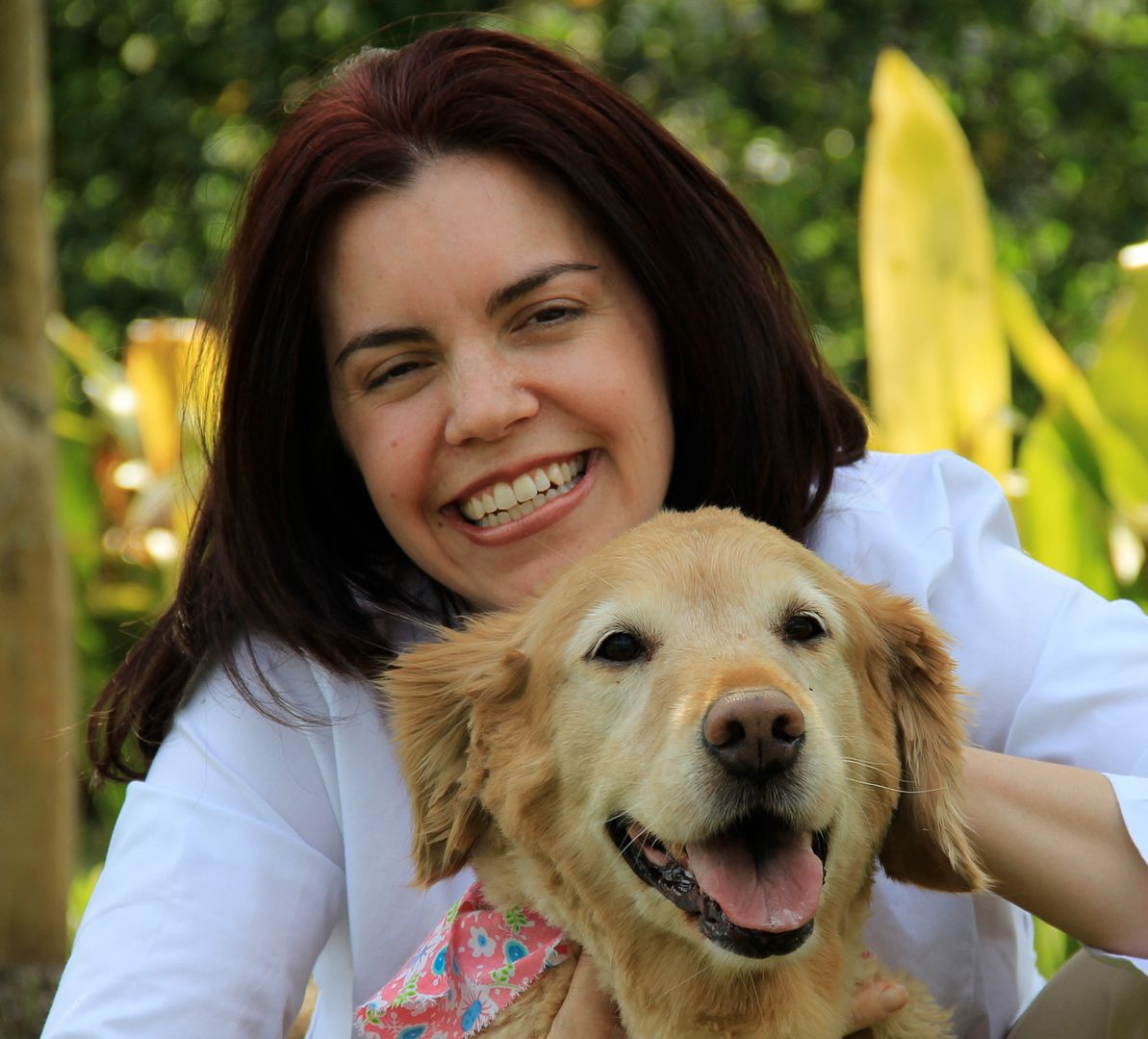







by Michael Baugh, CPDT-KA, CDBC
 |
| © K.B., reader copyright on file Toy-Sized Dogs Like Sugar Bear Often Prefer Human Companionship |
We adopted our 10 year old Bichon 3 years ago, when his elderly owner became disabled. He settled in with us just fine immediately and became very attached to me. Shortly thereafter, he began whining incessantly upon my leaving, slobbering and licking the point of exit. We have returned to pools of slobber and scratched paint. He has even climbed a doggie gate in an effort to get to me.
Alix has a housemate, Toby, with whom he gets along well. However, only human companionship is soothing to his anxiety. Please help us teach Alix to calm himself so we may return without a distressed, slobber-sodden little dog.
Regards, Cathy
-------------------------------------------------------------
Dear Cathy:
Dogs, like people, are social animals. We like to be around each other. Some folks would go so far as to say, we have a built-in need for social interaction. There’s something in the core of our beings that says relationships are important for our survival.
It’s not terribly common, but some dogs have pretty upsetting behavior when left alone. In some cases, it’s triggered by the departure of a specific individual. Like Alix, many of these dogs drool and scratch at points of exit. Others bark, cry, chew, pace, pant, and even lose control of their bladder and bowels. The most dramatic case I ever saw was a dog who chewed through the laundry room wall clear through to the garage. In the process he disconnected the washing machine and flooded the house. Then he got out the garage door and wandered the neighborhood, presumably looking for his people.
There is help for dogs like Alix. However, the process is slow and painstaking. The idea is to teach him that he is safe when people (especially Cathy) leave the home. Of course, it would be nice if we could have a reasonable chat with Alix about all this. Unfortunately, dogs don’t really work that way. We’ll have to show him. Here’s the painstaking part. We’re going to rehearse the process of leaving Alix, over and over again for a period of several weeks (perhaps months). I call these “safe departures.” In other words, we’re just pretending to leave. These departures are special because they come with a clear and specific “safety signal.” I use a bright red Kong Toy stuffed with food as the “safety signal.” The food is nice, but the real work of the Kong is to let the dog know, this departure is just make believe – you’re going to be okay. When we return, the safety signal gets put away.
My most successful case used “safe departures” exclusively. Slowly and progressively, the length of the departures increased, always with the Kong Toy present. When the owner actually had to go to work or run a long errand, she took the dog to her mother’s house or to doggie daycare. (That meant being left at home doubled as a “safety signal.”) The dog was also on veterinarian prescribed medication (an SSRI, selective serotonin reuptake inhibitor). It took almost 90 days before he could be left alone reliably without distress for a full work day. Interestingly, this was the same client dog that ate through the wall and flooded the house.
While there are books on separation distress, I recommend hiring a behavior consultant who has experience with this type of behavior. Look for someone with independent certification expertise in desensitization and counter-conditioning. Moreover, get someone who knows how to work with people. This training is detailed and drawn out. Good coaching is essential. Trust me, you’ll want someone by your side every step of the way. We’re social animals, after all.

Houston dog trainer, Michael Baugh CPDT-KA, CDBC, is the director of training and behavior at Rover Oaks Pet Resorts.You may reach him at the link for a personal consultation, or write to him at
our ASK THE DOG TRAINER Column at LetsAdoptaDogPark@gmail.com. Michael's advice does not replace an actual consultation with a qualified trainer.




 Posts
Posts